



Incorporating Improved Automation For Increased Production And Lower Costs
As demonstrated in virtually every industry today, we are in a new age of automation. Manufacturers across the globe are significantly increasing both efficiency and employee productivity by incorporating various automated elements into their operations. In addition to its primary benefits, many facilities discovered that a reliance on automation allowed them to keep up with demand during the COVID-19 pandemic. In the face of widespread labor shortages, improved automation helped businesses keep pace—and even thrive. But how can manufacturers prepare for similar scenarios in the future and begin reaping the benefits of increased productivity and decreased operating costs? The answer: by switching to PureSteel® metal conveyor belts and ditching the fabric, rubber or PVC alternatives.
Using sophisticated technology and innovative manufacturing processes, Belt Technologies, Inc., has been producing PureSteel® stainless steel conveyor belts, timing belts and pulleys for automated applications and conveyor systems for more than 50 years. These products are already in use in industries including food processing and packaging, solar cell assembly, UV and thermal curing, vacuum conveying, carriage positioning and many more. Utilizing these belts in automated assembly applications has become an increasingly popular option for several reasons, including the high strength-to-weight ratio, accurate positioning, cleanliness and overall reliability that they possess over alternative options.

1. Strength-to-Weight Ratio
Stainless steel has a tensile strength of 180-300 KPSI (thousand pound-force per square inch), depending on the chosen alloy and temper. Due to this strength, relatively thin and lightweight belts can be designed to handle the stresses of almost any application, as more of the conveyor’s input horsepower can be devoted to moving the product and not the belt— boosting efficiency and reducing operating expenses.
Stainless steel belts can be further strengthened by stacking them in a multilayer configuration, consisting of several bands ranging in thickness from 0.003 to 0.005 in. This configuration provides the combined strength of all layers while retaining the reduced bending stress of each individual layer, increasing the modulus of elasticity and helping to resist backlash. In this way, the stacked configuration improves the strength of the belt without sacrificing precision or flexibility in tight spaces.
2. Accurate Positioning
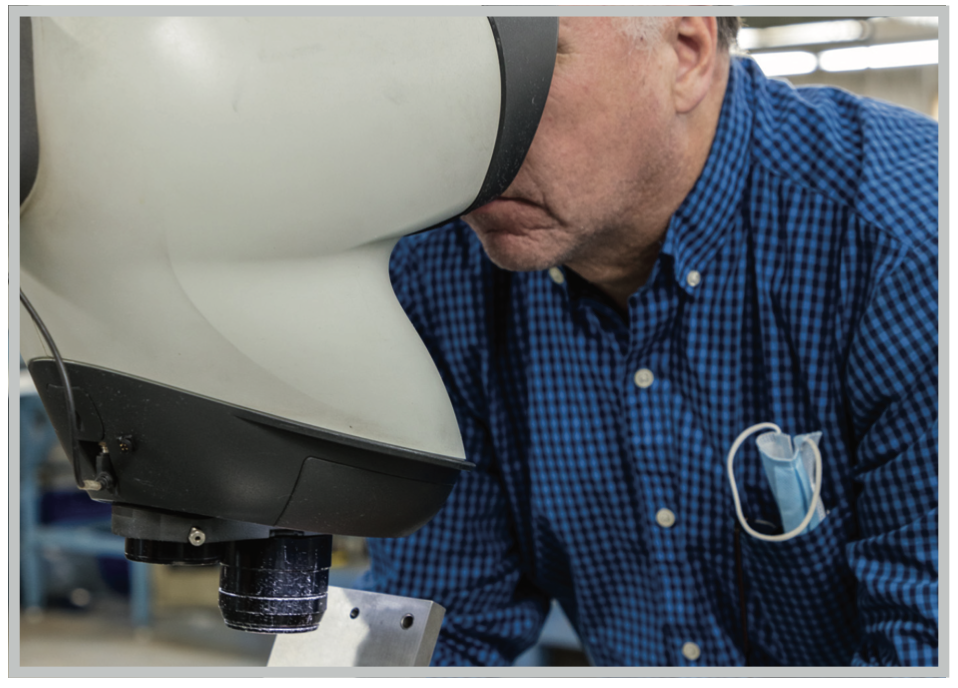
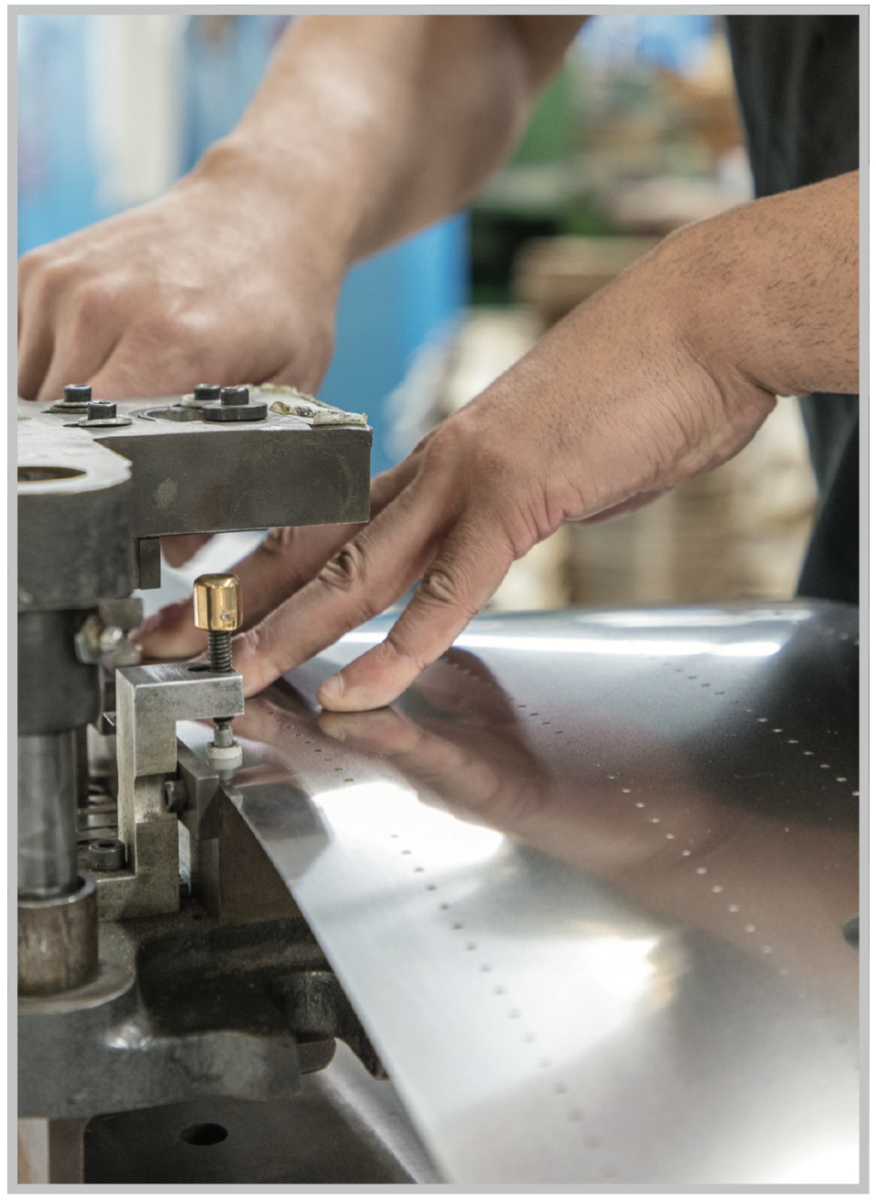
Metal belts can be fabricated with a pitch accuracy (the gap between perforations or timing pins) of 0.0005 inches. This is extremely valuable in designing, indexing, positioning or processing equipment as it ensures enhanced precision and repeatability. And it’s not just about the fabrication; stainless steel also retains its accurate positioning benefits during use. Other belt types can generate chordal action (when the chain transitions from its flat state to being wrapped around a sprocket), which leads to a pulsing motion in the chain. Continuous stainless steel belts are free from this pulsation of chordal action, resulting in precise translation of the control system motion profile.
3. Cleanliness
Belts made from polymeric materials often incorporate fibers for added strength. This comes with a major downside: at various locations throughout a conveyor system, the belt may rub against guides or rough edges. The repeated abrasion could then lead to small portions of the belt becoming detached and releasing dust and particulates into the air. Unlike these alternatives, stainless steel belts don’t generate dust or particulates that could ultimately necessitate frequent cleaning or even a production shutdown. The longevity of PureSteel® belts under intense operating conditions provides cost savings to manufacturers because of fewer belt changes and reduced downtime.
Unlike other belt materials that need to be removed from the conveyor for regular cleaning, metal belts can be cleaned in place with no removal required. Stainless steel is also resistant to corrosion, meaning it can be sanitized by high-pressure steam, high-pressure wash or chemical cleaning. Overall, this combination of a bacteria-resistant material and the superior manufacturing standards of solid endless conveyor belts and drive tapes offers diverse advantages, virtually endless applications and a lower-cost / higher-benefit ratio.
4. Reliability
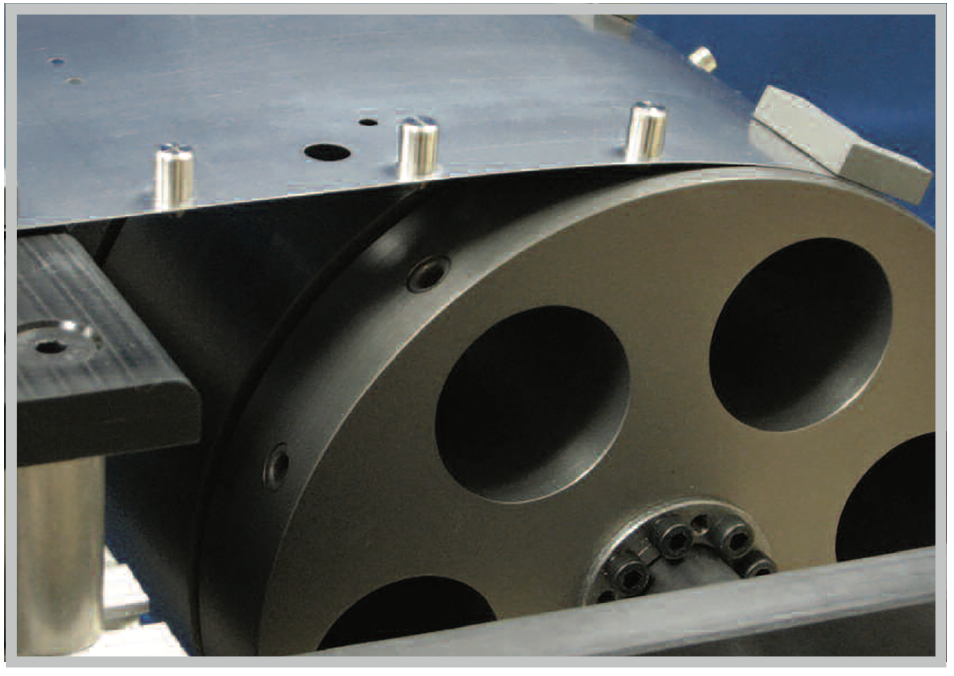
Virtually non-stretchable, metal conveyors, drive tapes and timing belts maintain operations precisely and accurately without requiring expensive replacement or repairs. Whether it’s extreme temperatures or unforgiving environments, PureSteel® metal belts can be engineered to handle virtually any condition you can throw at them. Inferior materials will warp, burn or fall apart at significantly lower temperatures, and shrink or become brittle in the cold. Stainless steel has a low thermal coefficient of expansion, enabling it to better resist high and low temperatures.
Belt Technologies offers several alloys that resist distortion and perform well in applications with extreme temperatures. For instance, Invar will remain flat when operating in environments up to 400°F, compared to 300-series stainless steel which can start to see distortion at temperatures below 400°F. What’s more, Inconel 625 and 718 can operate in environments with temperatures up to 1,600°F. With this wide array of alloys, all of which are corrosion resistant and vacuum compatible, industries of every kind are sure to find the optimal PureSteel® product for their application.
Every problem needs a customized solution, especially those within the manufacturing world. Whether you’re looking for a stronger, more accurate, more hygienic or more reliable option, a metal conveyor belt or drive tape may be the solution your facility requires. Belt Technologies is unique as they have their own in- house machine shop and highly skilled engineers who can deliver automation solutions to improve processes and production quality across the gamut of industries. As their advanced manufacturing technology allows for up to 1,000,000 custom perforations to be designed into a single belt, the company can create conveyors to any specifications. For instance, in addition to horizontal conveyor systems, Belt designs vertical and vacuum conveyor systems that also use PureSteel® stainless steel belts.
About Belt Technologies, Inc.
For more than 50 years, Belt Technologies, Inc., has produced PureSteel® metal conveyor belts, timing belts and pulleys ideally designed for automation applications. Committed to providing customized solutions to meet exact specifications and treating every project with an individualized approach, Belt helps customers achieve optimal performance while maintaining standards for
the most stringent levels of safety. If you’re ready for your facility to take advantage of all the benefits of automation, you can learn more at belttechnologies.com.
The team has also developed and implemented disruption plans to avoid delays due to the inevitable supply chain issues we see in today’s manufacturing landscape.
Denis Gagnon, BA, MBA
CEO of Belt Technologies, Inc.,
Agawam, Massachusetts
dgagnon@belttechnologies.com
413-786-9922
belttechnologies.com
