


The industrial heartland of the Northeast has long been a bedrock of innovation, resilience, and manufacturing prowess. From shipbuilding to automotive, healthcare devices to advanced military engineering, our region has consistently adapted and thrived. As we cast our gaze towards what lies ahead in 2026, the pace of technological advancement, global economic shifts, and evolving societal demands present both challenges and unparalleled opportunities for Northeast manufacturers. To remain competitive, sustainable, and at the forefront of the global industrial landscape, understanding and strategically integrating key emerging trends will be paramount. This article explores six pivotal trends that every manufacturing professional in our region should be considering and acting upon now.
- The Rise of Advanced Automation and Robotics: Beyond the Assembly Line
Automation in manufacturing is far from a new concept, but 2026 will see a profound evolution in its capabilities and accessibility. We are moving beyond rigid, repetitive automation towards sophisticated systems that are intelligent, flexible, and collaborative.
Imagine collaborative robots (cobots) working seamlessly alongside human operators, handling strenuous or dangerous tasks while humans focus on intricate assembly or quality control. Picture AI-powered robotics performing predictive maintenance on machinery, identifying potential failures long before they occur, drastically reducing downtime and maintenance costs. In the Northeast, where sectors like automotive and advanced materials engineering have complex production lines, these intelligent systems can significantly enhance efficiency, improve product quality, and create safer working environments. For example, a car assembly plant could deploy cobots to assist in heavy lifting or precision welding, freeing up skilled technicians to oversee and optimize the overall process. The investment in advanced automation isn’t just about replacing labour; it’s about augmenting human capability and unlocking new levels of productivity and innovation.
2. Digital Twins and the Industrial IoT: Precision from Hartford to Boston
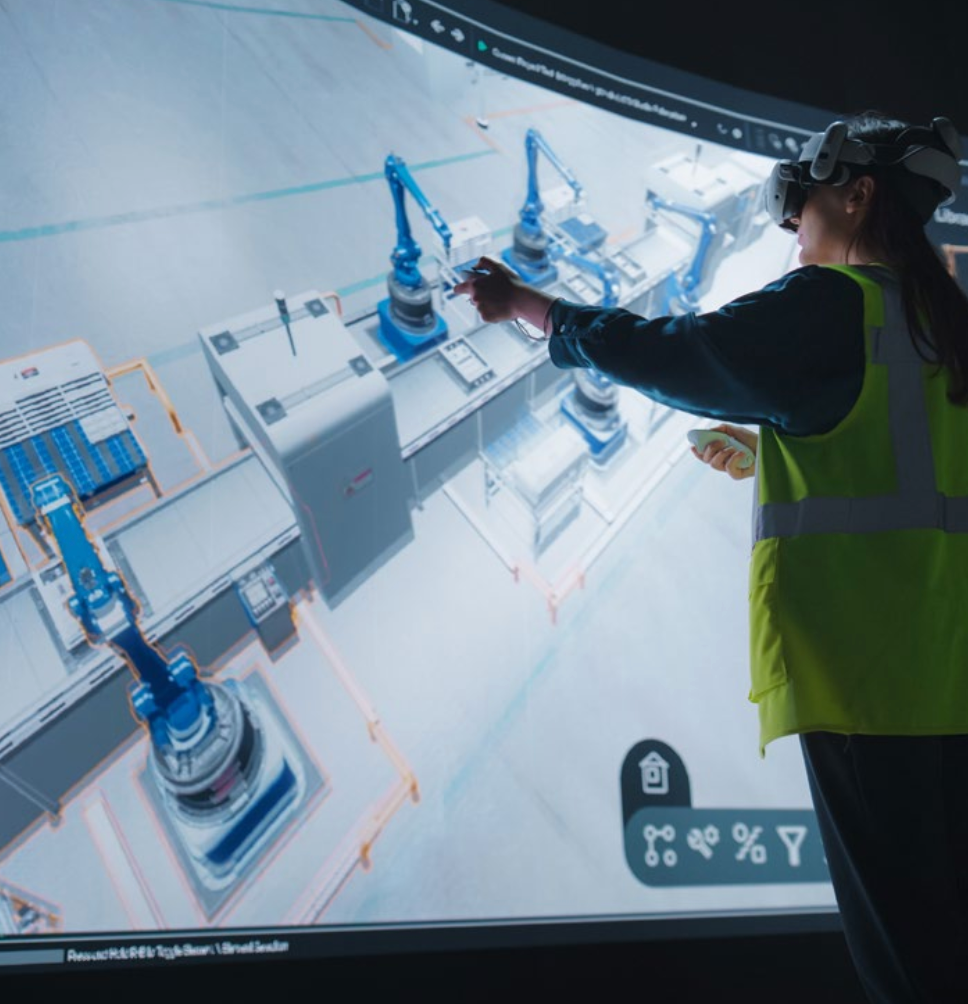
The concept of a “digital twin”—a high-fidelity virtual replica of a physical asset, process, or system—is no longer a “future-looking” experiment for New England’s specialized manufacturers; in 2026, it is an operational necessity. Coupled with the Industrial Internet of Things (IIoT), which leverages a network of smart sensors and edge computing, digital twins are allowing the region’s high-stakes industries to move from reactive maintenance to “prescriptive” intelligence.
For a MedTech firm in the Massachusetts “Brain Train” corridor, digital twins are being used to simulate the exact conditions of cleanroom production. By creating a virtual model of a robotic sterilization line, engineers can test the impact of increased throughput or new packaging materials without risking a single physical prototype. This reduces the time-to-market for life-saving devices by up to 30%, a critical advantage in the competitive 2026 healthcare landscape.
Meanwhile, in Connecticut’s “Aerospace Alley,” the integration of IIoT is transforming the manufacturing of turbine components. Sensors embedded in CNC machines and specialized forging presses stream data directly into a digital twin, allowing plant managers to predict equipment fatigue before a failure occurs. In a sector where tolerances are measured in microns and a single hour of downtime can cost thousands, this predictive capability is the difference between a profitable quarter and a massive backlog.
For New England manufacturers, the 2026 mandate is clear: Data is the new raw material. By bridging the gap between the shop floor in Rhode Island and the engineering lab in New Hampshire through a “digital thread,” companies are achieving a level of agility that allows them to compete not on labor costs, but on sheer technical precision and operational uptime.
- Sustainable Manufacturing and Circular Economy Principles: A Green Revolution
The pressure for industrial manufacturers to adopt more sustainable practices is accelerating, driven by stringent environmental regulations, corporate social responsibility, and growing consumer demand for eco-friendly products. By 2026, sustainable manufacturing and the embrace of circular economy principles will be non-negotiable for competitive Northeast businesses.
This trend encompasses optimising energy consumption, with many Northeast factories already exploring renewable energy sources like solar and wind (as seen in the wider regional investment in offshore wind). It also involves drastically reducing waste through lean manufacturing techniques, implementing advanced recycling programs for materials, and designing products with their end-of-life in mind – making them easier to repair, refurbish, or recycle. A Northeast manufacturer of industrial components, for instance, might redesign their products using modular components that can be easily replaced, extending product life and reducing material consumption. Furthermore, exploring localised sourcing and closed-loop material flows within the region can reduce carbon footprints. Embracing circularity isn’t just about compliance; it’s about creating new value streams, enhancing brand reputation, and future-proofing operations against resource scarcity and price volatility.
- Resilient Supply Chains and Localisation: Strengthening Regional Networks
The global disruptions of recent years, from pandemics to geopolitical events, have starkly highlighted the vulnerabilities of extended, complex supply chains. In 2026, Northeast manufacturers will increasingly prioritise building robust, resilient supply chains, often through a strategic move towards localisation and regional partnerships.
This involves diversifying supplier bases to reduce reliance on single points of failure, but critically, it also means exploring opportunities for nearshoring or reshoring production where feasible. For the Northeast, this could translate into a renewed focus on strengthening regional manufacturing ecosystems. Imagine a regional aerospace supplier collaborating more closely with local materials providers and machining firms, reducing lead times and transportation costs while simultaneously bolstering the local economy. Investment in advanced supply chain analytics and AI-driven forecasting tools will also be crucial, allowing companies to predict and mitigate risks before they impact production. By building stronger, more agile, and often more localised supply networks, Northeast manufacturers can protect themselves from future shocks and ensure continuity of operations.
- Augmented and Virtual Reality (AR/VR) for Training and Operations: Bridging the Digital-Physical Divide
Once primarily associated with gaming, Augmented Reality (AR) and Virtual Reality (VR) technologies are rapidly maturing into powerful tools for industrial applications, offering transformative potential for training and operational efficiency in Northeast factories.
Consider the challenge of training new technicians on complex machinery without disrupting live production. VR can create immersive, risk-free virtual environments where employees can practice assembly, maintenance, and troubleshooting procedures repeatedly until proficient. Similarly, AR can provide real-time assistance on the factory floor. A maintenance technician wearing AR glasses could see digital overlays on a piece of equipment, displaying repair instructions, diagnostic information, or even connecting them remotely with an expert for guidance. This significantly reduces human error, accelerates training times, and improves the speed and accuracy of maintenance and quality control tasks. For Northeast companies in intricate manufacturing sectors, AR/VR offers a powerful way to transfer knowledge, enhance safety, and improve operational execution.
- Workforce Transformation and Skills Development: Preparing for the Future Factory
The adoption of advanced technologies across all these trends fundamentally necessitates a transformation of the manufacturing workforce. By 2026, the human element in the Northeast’s factories will be more critical than ever, but the required skillsets will be significantly different.
Manufacturers must proactively invest in upskilling and reskilling their existing employees. This means training in data analytics, operating advanced automation, cybersecurity, and understanding complex digital systems. It also involves attracting a new generation of talent with strong STEM (Science, Technology, Engineering, Mathematics) skills. The Northeast has a strong network of colleges and universities; forging closer partnerships with these institutions to develop tailored apprenticeship programs and curriculum relevant to the ‘factory of the future’ will be vital. Creating a culture of continuous learning, embracing digital literacy, and fostering problem-solving abilities will empower the workforce to work synergistically with new technologies, ensuring our region’s industrial future remains bright.
Seizing the Future, Together
The landscape of industrial manufacturing is evolving at an unprecedented pace. For manufacturers here in the Northeast, 2026 represents a critical juncture – a time to embrace innovation, invest strategically, and adapt proactively. The six trends outlined here are not merely technological novelties; they are fundamental shifts that will define competitiveness, sustainability, and growth. By strategically integrating advanced automation, leveraging digital twins and IIoT, championing sustainable practices, building resilient supply chains, deploying AR/VR, and crucially, transforming our workforce, the Northeast can solidify its position as a leading force in global manufacturing. The future is being built today, and with foresight and collaboration, our region is poised to build it stronger than ever.
