


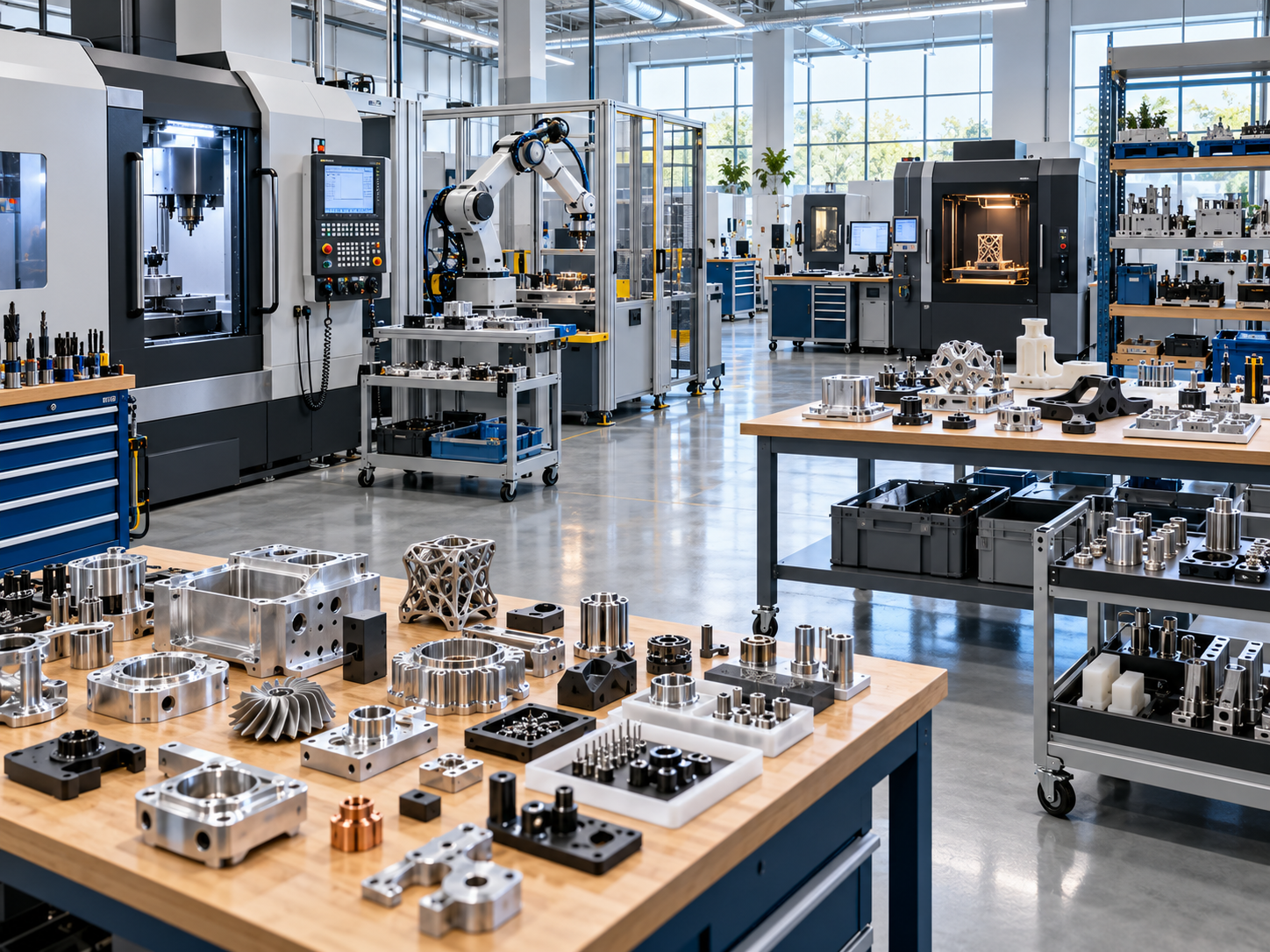
As manufacturing continues to evolve, the traditional emphasis on high-volume production and large-scale efficiency is giving way to a more flexible approach. Across the Northeast, manufacturers are increasingly focusing on smaller production runs, specialized components, customized products, and faster responses to changing customer demands. For precision machine shops, metal fabricators, plastics manufacturers, electronics producers, and industrial suppliers, the ability to manufacture smaller quantities efficiently is becoming an important competitive advantage.
Known throughout the industry as high-mix, low-volume manufacturing, this production model allows companies to serve a broader range of customers without relying exclusively on large, repetitive orders. As advances in automation, digital manufacturing, and production management make smaller production runs more practical, manufacturers are finding new opportunities to compete through adaptability, technical expertise, and responsiveness.
For New England manufacturers in particular, this shift aligns closely with the region’s longstanding strengths in precision engineering, specialized manufacturing, and customer-focused production.
The Shift Toward High-Mix, Low-Volume Production
Traditional mass manufacturing is built around producing large quantities of standardized products as efficiently as possible. While this approach remains essential for many industries, an increasing number of manufacturers are serving customers whose needs require smaller quantities, greater customization, and more frequent product changes.
High-mix, low-volume manufacturing focuses on producing a wide variety of components or products in relatively small batches. Rather than dedicating equipment to long production runs of identical parts, manufacturers must regularly adjust machinery, tooling, materials, and processes to accommodate different specifications.
This approach is particularly valuable in industries such as aerospace, medical devices, defense, electronics, and specialized industrial equipment, where production requirements can vary significantly from one project to another.
For smaller and mid-sized manufacturers, the ability to manage diverse production requirements creates opportunities to serve specialized markets that may not be attractive to large, high-volume production facilities.
As customers increasingly prioritize customization, product quality, and reliable delivery, flexible production capabilities are becoming an important differentiator.
Technology Makes Smaller Production Runs More Efficient
Historically, smaller production runs often presented significant challenges for manufacturers. Equipment setup, tooling changes, programming requirements, and material handling could make low-volume production less cost-effective than larger orders.
Today, advances in manufacturing technology are helping companies overcome many of these limitations.
Modern computer numerical control (CNC) machining systems allow manufacturers to produce complex components with a high degree of accuracy while transitioning between different jobs more efficiently. Digital programming, automated tool changers, and advanced machining software help reduce setup requirements and improve production consistency.
Robotics and automated material-handling systems are also supporting flexible manufacturing environments. Equipment that can be reprogrammed for different applications allows manufacturers to automate repetitive tasks without committing exclusively to a single product or production process.
Digital production management platforms provide greater visibility into scheduling, material availability, machine utilization, and workflow efficiency.
Together, these technologies are helping manufacturers improve productivity while maintaining the flexibility required to serve customers with diverse production needs.
Customization Creates New Opportunities
One of the most significant advantages of small-batch manufacturing is the ability to accommodate highly specialized customer requirements.
Many industrial customers no longer need thousands of identical components. Instead, they may require limited quantities of precision parts, customized assemblies, prototype components, or specialized equipment designed for a specific application.
This is particularly common among companies developing new medical devices, aerospace technologies, industrial automation systems, and advanced electronic products.
Manufacturers capable of supporting custom production can become valuable partners throughout the product development process. Rather than simply producing components from completed designs, they may collaborate with engineers to evaluate manufacturability, recommend materials, improve designs, and identify opportunities to reduce production costs.
These relationships can lead to long-term partnerships as customers move from initial prototypes into limited production and eventually larger manufacturing programs.
For New England manufacturers, technical expertise and close collaboration with regional customers can create a meaningful advantage over suppliers focused primarily on high-volume commodity production.
Managing the Challenges of Flexible Production
While high-mix, low-volume manufacturing offers significant opportunities, it also introduces operational challenges that require careful planning.
Frequent equipment changeovers, varying material requirements, complex scheduling, and changing customer specifications can place additional demands on production teams.
Manufacturers must balance the need for flexibility with maintaining consistent quality, controlling costs, and meeting delivery commitments.
Effective production scheduling becomes particularly important when multiple projects compete for the same machines, tooling, and skilled employees. Digital manufacturing systems can help managers identify bottlenecks, monitor production progress, and adjust schedules as priorities change.
Standardized setup procedures, organized tooling systems, and accurate documentation also play an important role in reducing downtime between jobs.
Quality control requires additional attention as well. When manufacturers produce a wide variety of components, inspection procedures and production requirements may change frequently. Maintaining accurate digital records and clear communication between engineering, production, and quality teams helps ensure that every project meets its specifications.
Companies that successfully manage these challenges can turn operational flexibility into a sustainable competitive advantage.
Regional Manufacturing Supports Faster Collaboration
The growing importance of flexible production also reinforces the value of regional manufacturing partnerships.
For companies developing specialized products, working with nearby manufacturers can simplify communication, shorten transportation distances, and improve coordination during design and production.
Engineers and purchasing teams can collaborate directly with local suppliers to review technical requirements, evaluate prototypes, and make adjustments without the complications associated with distant manufacturing relationships.
Across New England, the concentration of precision machine shops, specialized fabricators, electronics manufacturers, and advanced materials suppliers creates opportunities for businesses to build more responsive regional supply chains.
This proximity can be especially valuable when customers require design changes, expedited production, or additional engineering support.
While overseas production continues to play an important role in manufacturing, regional suppliers offering flexible capabilities and dependable service can provide advantages that extend beyond the initial cost of individual components.
Skilled Employees Remain Essential
Despite the increasing use of automation and advanced production technology, flexible manufacturing continues to depend heavily on skilled employees.
Unlike repetitive production environments, high-mix manufacturing frequently requires workers to interpret new designs, adjust equipment, solve unexpected problems, and transition between different manufacturing processes.
Experienced machinists, engineers, programmers, quality technicians, and production managers provide the technical knowledge necessary to maintain efficiency across changing production requirements.
As a result, workforce development and employee training remain critical priorities.
Manufacturers are increasingly seeking employees with a combination of traditional manufacturing knowledge and digital technology skills. Experience with CNC programming, computer-aided manufacturing software, robotics, and automated inspection systems is becoming especially valuable.
For manufacturers facing labor shortages, investing in employee development can improve productivity while strengthening the flexibility needed to support more specialized production.
Flexibility as a Competitive Advantage
The manufacturing industry is becoming increasingly specialized, and companies are recognizing that production flexibility can be just as valuable as manufacturing capacity.
High-mix, low-volume manufacturing allows businesses to serve diverse customers, respond to changing demand, support product development, and pursue specialized opportunities that may fall outside traditional mass-production models.
For manufacturers throughout the Northeast, combining advanced production technologies with technical expertise and strong customer relationships creates opportunities for long-term growth.
Success will depend on more than simply producing smaller quantities. Manufacturers must continue improving scheduling, quality control, automation, workforce capabilities, and collaboration throughout the production process.
As industrial markets evolve, the most competitive manufacturers may not always be those producing the greatest number of identical components. Increasingly, they will be those capable of delivering the right products, in the right quantities, with the precision, reliability, and responsiveness customers expect.
In an industry historically defined by scale and volume, flexibility is becoming one of manufacturing’s most valuable capabilities.
