



The following article was written and submitted by Joseph Schlossberg, Vice President of Global Sales – Sourcing Solutions International
As the effects of climate change are increasingly felt, consumers increasingly seek real change from the retail industry. According to a recent survey conducted by The Economist, Internet searches for sustainable products shot up 71 percent over the past five years.
Similarly, McKinsey & Company has found that 66 percent of all survey participants consider sustainability while making purchasing decisions. That number shoots up to 75 percent for Millennials.
How can businesses in this sector ensure a greener future? Groundbreaking advances in Radio Frequency Identification (RFID), sustainable packaging, energy efficiency, and renewable energy can make companies in the retail sector more sustainable, but these technologies also offer significant benefits for the bottom line. As a result, they can help businesses attract customers even while increasing their profitability.
What is RFID?
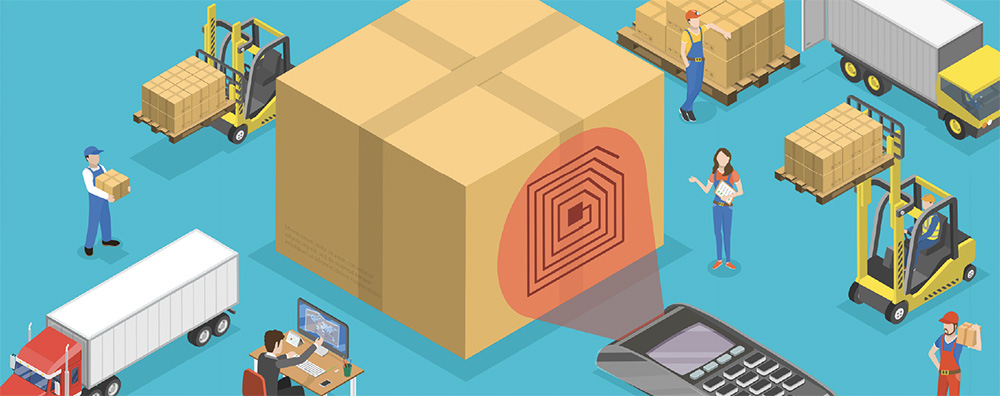
While many customers may not be familiar with RFID technology, chances are high that it’s probably already in their wallets as the technology that powers tappable credit cards. A microchip on the card emits a radio signal that the reader accesses and decodes, charging the purchase amount to the customer’s account.
Tappable credit cards are just one small example of what RFID can do, however. When RFID tags are added to product packages, boxes, pallets, or shipments, they greatly facilitate manufacturing, shipping, and retail procedures, allowing workers to scan whole warehouses full of inventory simply by walking down their aisles.
By implementing this technology, manufacturers, retailers, and businesses throughout the supply chain can greatly enhance their sustainability in many ways.
RFID empowers superior inventory management
First of all, RFID tracks inventory better than previous methods by providing an accurate picture of pallets, boxes, and their contents, giving businesses a clear idea of what they actually have on hand, as well as where it is located, at all times. Leadership and management can call up a real-time inventory at a moment’s notice.
This enables businesses to better manage their inventory and make decisions to eliminate excess waste and overstocking. Plans can be laid for bringing the right amount of inventory to the right places according to the most advantageous timelines, meaning staff no longer have to navigate crowded spaces or, worse yet, discard unsold goods to make room for new shipments.
All of these benefits translate into improved operations for the business itself, but the careful shepherding of resources also means the company becomes more sustainable from an environmental standpoint. Less waste and more efficiency lighten the company’s impact on the planet.
RFID builds trust through sustainable sourcing
RFID technology also improves sourcing processes and makes them more sustainable. When products have RFID tags, suppliers and manufacturers can reassure their customers about their ethical origin and highlight the use of local materials, which cuts down on both shipping costs and carbon emissions. When retailers can see the provenance of items and components, following their journey throughout their life cycle, their trust grows, as well as their loyalty to those sources.
These benefits carry through to consumers, who increasingly reward ethical and sustainable businesses with their dollars. According to a 2023 McKinsey & Company report, consumer sentiment is driving accelerated growth for sustainable businesses. Products associated with environmental, social, and governance initiatives enjoyed an average of 28 percent cumulative growth over five years, trouncing the 20 percent seen by products that weren’t.

RFID optimizes supply-chain logistics
RFID can also streamline supply-chain logistics because these tags provide real-time data on the movement of shipments. For instance, the empirical data these systems generate can be interrogated to reveal the most advantageous transportation routes. Companies can move away from those trajectories that, while they might look good on paper, actually involve bottlenecks or waiting times that end up consuming more time or fuel than alternatives.
Moreover, researchers have observed that RFID technology can ensure goods are handled correctly during shipping. Algorithms can use the information in these tags to develop plans for unloading vessels and stowing cargo in the most beneficial configurations.
Similarly, algorithms can use RFID data to calculate the best and most stable cargo configurations for ships and trucks. For instance, refrigerated containers need to be positioned near electrical outlets, while other shipments may need to be kept out of direct sunlight. This kind of careful handling maximizes the chances that even fragile or otherwise difficult shipments will reach their destinations without incurring damage.
The result of these changes is more efficient shipping that is not only good for the company’s bottom line but also for the environment. The less energy that is consumed during transportation, the smaller each shipment’s carbon footprint, and these savings become significant when considered on an industrial scale.
Another powerful strategy to reduce the industry’s ecological impact is incorporating biodegradable or recyclable materials into retail operations.
Transitioning to eco-friendly packaging
Transitioning to sustainable product packaging goes a long way to advancing a circular economy. Packaging companies are coming up with innovative designs and formulations to reduce the amount of plastic in packaging, as well as create compostable plastics or plant-based alternatives. Other companies are mastering how to turn waste products back into virgin plastic for reuse.
In the apparel industry, environmentally friendly hangers are now available. Some models use less plastic than conventional hangers, yet are still stronger than them, while others feature hooks that can collapse to the side. This means they take up less space, reducing storage and shipping costs, as well as decreasing fuel expenditures. Today’s hangers can even do away with plastic completely — some are made from fiberboard, paper, or post-consumer waste. Paper hangers with plastic hooks, called “hybrid hangers,” necessitate only 15 percent of the plastic of a conventional hanger.
Importantly, switching to eco-friendly packaging solutions like these wins the approval of most consumers. The aforementioned McKinsey & Company report found that over 60 percent of participants would even pay more for a product with sustainable packaging.
Manufacturers and other retail businesses can also improve their sustainability, as well as their profitability, by embracing new energy efficiency technologies.
Energy efficiency and renewable energy
Perhaps the fastest and easiest way to manage energy strategically is by investing in energy-efficient lighting, facilities, and equipment. This can be done by upgrading to LED bulbs, using smart heating, ventilation, and air conditioning systems, and embracing energy-efficient machinery. Incorporating these technologies reduces businesses’ carbon footprint and energy bills at the same time.
Companies can also benefit from next-generation energy management systems, which use Industrial Internet of Things (IIoT) sensors to monitor energy consumption and flag areas for improvement, allowing management to implement targeted changes. They can also be set up to automatically conserve energy as much as possible, adjusting energy usage in response to criteria like temperature, amount of sunlight, and occupancy.
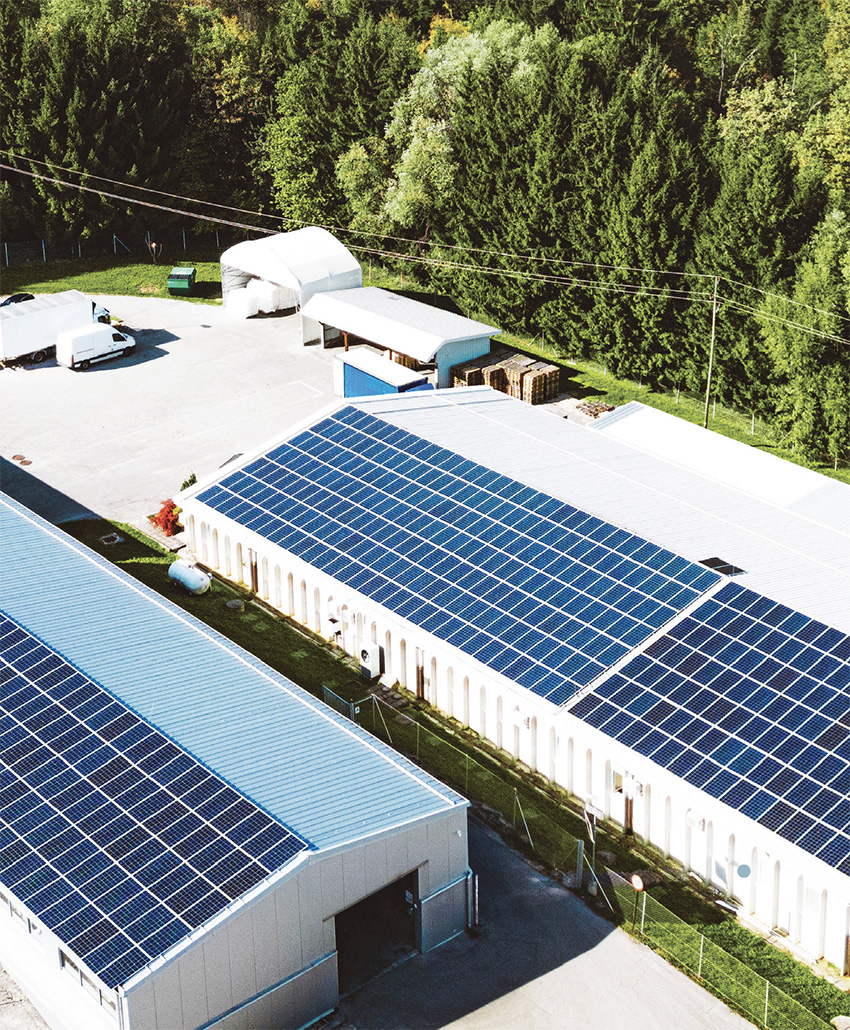
Advances in technology have also made solar energy more efficient, reliable, and scalable. Indeed, commercial systems have become so powerful and cost-effective that solar is now a real option even for large businesses and manufacturers. Incorporating renewable energy is an excellent way for businesses to reduce their reliance on fossil fuels and decrease greenhouse gas emissions.
Lead the industry, reap the rewards
The retail industry has a crucial role in preserving the environment. Through the adoption of RFID, sustainable packaging, energy efficiency, and renewable energy, businesses in this sector can drive meaningful change. When manufacturers, suppliers, distributors, and retailers embrace greener practices, everyone benefits.
By raising awareness of their corporate social responsibility, businesses in the retail sector can establish themselves as industry leaders and appeal to today’s environmentally conscious consumers. As a result, they will reap the rewards of increased customer loyalty and market share, as well as build leaner, more profitable companies that promote a greener future for generations to come.

Joseph Schlossberg is a Vice President of Global Sales at Sourcing Solutions International. Sourcing Solutions International is a one-of-a-kind supplier that manufactures both hangers and packaging for the apparel/retail industry. The company proudly works in partnership with some of the largest and most wellknown retailers and apparel brands, providing paper/ plastic/hybrid garment and accessory hangers, labels, hang tags, packaging, and RFID solutions.
For further information, please visit: www.ss-intl.com.
