


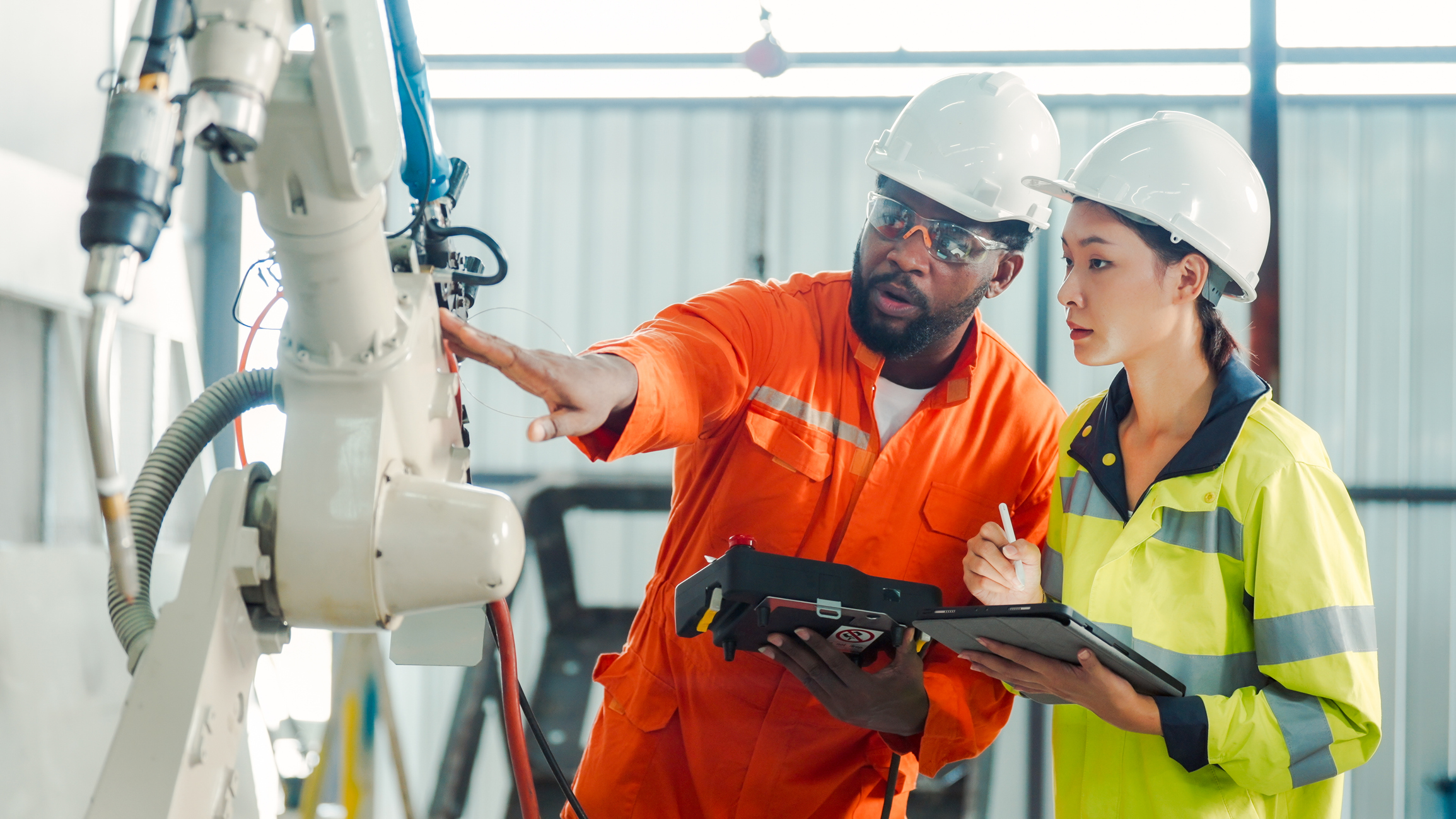
As manufacturing facilities across the Northeast continue to modernize, workplace safety is evolving alongside automation, connectivity, and digital transformation. Today’s industrial environments are increasingly powered by intelligent machinery, connected systems, robotics, and real-time analytics — technologies that are not only improving productivity, but also fundamentally reshaping how manufacturers approach employee safety and operational risk management.
For manufacturers operating in industries such as aerospace, metal fabrication, plastics, food production, logistics, and advanced materials, maintaining a safe work environment has always been a critical priority. However, as production systems become more complex and labor shortages continue to challenge the industry, manufacturers are investing heavily in technologies and strategies designed to reduce accidents, improve training, and create safer, more efficient workplaces.
The Shift Toward Proactive Safety Management
Traditionally, many manufacturing safety programs relied heavily on reactive processes — responding to incidents after they occurred and implementing corrective actions afterward. In 2026, however, manufacturers are increasingly adopting proactive safety strategies powered by connected technologies and real-time data collection.
Modern industrial facilities now use sensors, cameras, wearable devices, and machine monitoring systems to identify potential hazards before they result in injury or equipment failure. Connected systems can detect unsafe operating conditions, excessive machine vibration, overheating equipment, or unauthorized access to restricted areas in real time.
This shift toward predictive safety management allows manufacturers to intervene early, reducing both workplace injuries and costly production interruptions. Rather than simply documenting incidents, companies are using data to prevent them from happening in the first place.
Smart Sensors and Connected Equipment
Connected industrial equipment is playing an increasingly important role in workplace safety across manufacturing facilities. Smart sensors integrated into machinery can continuously monitor operational conditions and alert operators when equipment is functioning outside safe parameters.
For example, automated shutdown systems can stop production equipment immediately if unsafe conditions are detected. Sensors can identify abnormal temperature increases, pressure fluctuations, or mechanical stress before a machine failure creates a dangerous situation for workers.
In warehouses and logistics facilities, connected systems are helping reduce collisions between forklifts, autonomous vehicles, and employees by monitoring traffic patterns and issuing proximity alerts in real time. Some facilities are even deploying AI-powered camera systems capable of detecting unsafe behaviors such as employees entering hazardous areas without proper protective equipment.
As connected safety technologies become more affordable and accessible, manufacturers of all sizes are beginning to integrate them into daily operations.
Wearable Technology Improves Worker Protection
Wearable technology is also emerging as a powerful tool for improving industrial safety. Smart helmets, connected safety vests, biometric monitors, and wearable tracking devices are allowing manufacturers to monitor employee safety conditions in real time.
These systems can detect worker fatigue, monitor environmental conditions, track employee locations within large facilities, and send emergency alerts during accidents or hazardous situations. In environments involving confined spaces, hazardous materials, or extreme temperatures, wearable devices can provide critical real-time information that helps prevent injuries and improve emergency response times.
Wearables are also supporting ergonomics and injury prevention initiatives. Motion-tracking systems can help identify repetitive movements or lifting techniques that may contribute to long-term musculoskeletal injuries, allowing manufacturers to improve workflows and reduce strain on employees.
For manufacturers facing labor shortages and an aging workforce, reducing physical strain and improving worker safety has become increasingly important for employee retention and operational stability.
Automation and Robotics Reduce High-Risk Tasks
One of the most significant safety benefits of industrial automation is the ability to remove workers from dangerous or physically demanding tasks. Collaborative robots, automated material handling systems, and robotic process automation are increasingly being used to perform repetitive, hazardous, or high-risk operations.
In manufacturing environments involving welding, heavy lifting, chemical exposure, or high-temperature processes, robotics can significantly reduce employee exposure to workplace hazards. Rather than replacing workers entirely, many manufacturers are using automation to allow employees to focus on oversight, quality control, programming, and higher-value operational tasks.
Collaborative robots, or cobots, are specifically designed to work safely alongside human employees. Equipped with advanced sensors and safety controls, cobots can automatically slow down or stop when workers enter their operating space, helping create safer collaborative work environments.
As automation technology continues to improve, manufacturers are finding new ways to increase both safety and productivity simultaneously.
Virtual Reality and Advanced Safety Training
Training remains one of the most important components of workplace safety, and manufacturers are increasingly using virtual reality (VR) and augmented reality (AR) technologies to improve employee preparedness.
VR-based training systems allow employees to practice operating equipment, responding to emergencies, and navigating hazardous scenarios in fully simulated environments without risk to personnel or production operations. Workers can repeat procedures multiple times until they become proficient, improving both confidence and safety awareness.
AR systems are also being deployed on factory floors to provide real-time guidance during maintenance, repairs, or complex assembly tasks. Employees wearing AR-enabled devices can access visual instructions, safety warnings, and operational data directly within their field of vision.
These technologies are helping manufacturers improve training consistency, reduce onboarding time, and ensure employees are better prepared to work safely in increasingly advanced industrial environments.
Cybersecurity and Operational Safety
As manufacturing systems become more connected, cybersecurity is becoming closely tied to workplace safety. Industrial control systems, automated machinery, and connected production networks can all become vulnerable to cyberattacks that may disrupt operations or compromise safe equipment functionality.
Manufacturers are increasingly investing in industrial cybersecurity measures designed to protect both operational continuity and employee safety. Securing industrial networks, limiting unauthorized access, and monitoring connected systems for cyber threats are now considered essential components of modern safety programs.
For manufacturers operating critical infrastructure or serving defense and aerospace industries, cybersecurity and physical safety are becoming inseparable operational priorities.
Building Safer Factories for the Future
The manufacturing industry is undergoing a major transformation, and workplace safety is evolving alongside it. Smart sensors, connected equipment, wearable technologies, automation, AI-driven analytics, and immersive training systems are helping manufacturers create safer, more efficient industrial environments across the Northeast and beyond.
The factories of the future will not simply be faster or more automated — they will also be smarter, more connected, and significantly safer for the people who power them. Manufacturers that invest strategically in modern safety technologies and proactive risk management will be better positioned to protect employees, reduce operational disruptions, and build more resilient businesses for years to come.
As industrial innovation accelerates, workplace safety is no longer just a compliance requirement. It is becoming a core driver of operational excellence, workforce retention, and long-term manufacturing success.
