


The “Made in USA” label has long been a badge of honor for domestic manufacturers, carrying with it an implicit promise of quality, community support, and national pride. However, for many business leaders, that badge is becoming a source of significant regulatory anxiety.
On March 13, 2026, the landscape shifted dramatically with the signing of Executive Order 14392, “Ensuring Truthful Advertising of Products Claiming to be Made in America.” This directive signals an era of proactive, aggressive enforcement that should put every manufacturer and online retailer on high alert.
The Shift from Complaint to Scrutiny
For years, Federal Trade Commission (FTC) enforcement regarding origin claims was largely complaint-driven. A company might only find itself under the microscope if a competitor or a disgruntled consumer raised concerns.
Those days are over. The new Executive Order instructs the FTC to adopt a more proactive approach to scrutiny. This is particularly relevant for e-commerce businesses. The order specifically targets online marketplaces, suggesting that platforms may soon be held liable if they fail to verify the origin claims made by third-party sellers.
For manufacturers, this means the digital “Made in USA” badge on a website is now just as legally binding—and potentially dangerous—as the physical sticker on the box.
The Big Three Risks
Proactive Enforcement
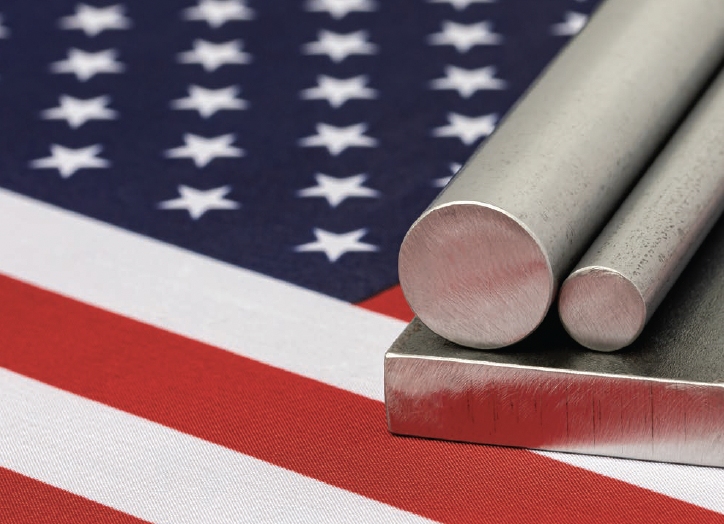
The FTC is no longer waiting for complaints. Regulators are actively auditing e-commerce listings, digital “Made in USA” badges, and even patriotic imagery such as flags or maps that imply domestic origin.
Platform Liability
Online marketplaces are increasingly under pressure to verify seller claims. If your digital badges are not backed by documentation, your products could face delisting or broader platform penalties.
Personal Liability
The FTC is increasingly naming individual owners and CEOs in lawsuits rather than limiting actions to the corporate entity. Compliance failures can become personal liabilities.
Understanding the “All or Virtually All” Standard
To make an unqualified “Made in USA” claim, products must satisfy three key requirements:
Final Assembly
The product’s final assembly or processing must occur in the United States.
Significant Processing
All significant manufacturing processes that go into the product must occur domestically.
Domestic Content
All or virtually all ingredients and components must originate in the United States.
Unlike many regulations, the FTC does not rely on a fixed percentage such as 90 or 95 percent. Instead, regulators examine the importance and “remoteness” of foreign content. Even a relatively inexpensive imported component could jeopardize an unqualified claim if it performs a critical function.
The High Cost of Non-Compliance
The financial stakes have reached record highs.
In early 2024, Kubota North America faced a $2 million civil penalty for false origin claims involving replacement parts. Another high-profile cookware retailer was hit with a record $3.175 million penalty after violating an earlier FTC order by continuing to market Chinese-made products as “Made in USA.”
Closer to home, New England-based Chaucer and Bates Accessories were required to refund more than $140,000 to consumers after violating origin standards.
These cases demonstrate that the FTC is willing to pursue not only companies, but also individual executives and owners.
The Rise of Qualified Claims
Because modern supply chains are rarely entirely domestic, many manufacturers are adopting qualified claims that provide transparency while still highlighting their U.S. presence.
Examples include:
- Made in USA with U.S. and imported parts
- Assembled in USA
- 60% U.S. content
These statements are legally safer because they accurately reflect foreign involvement while communicating domestic value.
The qualification, however, must be clear and prominent. Fine print hidden in a website footer will not satisfy regulators.
A Strategic Roadmap for Manufacturers
In today’s heightened enforcement environment, “Made in USA” should be treated as a core compliance issue rather than a marketing slogan.
Conduct a Comprehensive Claim Audit
Review every touchpoint where origin claims appear, including:
- Product pages and e-commerce filters
- Social media imagery
- Advertising creatives
- Influencer content
- Packaging and labels
Remember that implied claims matter just as much as explicit ones. An American flag displayed beside a product containing imported components could create legal exposure.
Map Your Supply Chain
Go beyond Tier 1 suppliers and understand where components originate. Document where substantial transformation occurs and maintain records that can support your claims during an audit.
Verify Government Procurement Requirements
Government agencies are increasingly reviewing domestic-origin claims. False claims can trigger investigations under the False Claims Act and lead to permanent removal from procurement programs.
Train Marketing and Sales Teams
Patriotic branding is easy to create but difficult to defend. Regular training helps ensure that marketing materials do not unintentionally create claims that cannot be substantiated.
Turning Compliance into Competitive Advantage
While Executive Order 14392 introduces new risks, it also presents opportunities.
As regulators crack down on deceptive claims and “patriotic washing,” manufacturers that can genuinely demonstrate their domestic footprint will stand apart from competitors.
By treating supply chain transparency as a strategic asset rather than a regulatory burden, companies can protect themselves from costly penalties while building deeper trust with customers.
In 2026, the most valuable thing a manufacturer can produce may not be the product itself—it may be the proof behind the label.
