



Written by Paul Critchley
While the core principles of Lean are generally agreed upon (delivering value to the customer, eliminating waste, showing respect for people), one of the places where opinions differ is the application of Lean in Job Shop environments. In Lean-speak, we call these places “High Mix – Low Volume” environments. Because of this inherent variety in part mix and complexity, it does become very difficult to see the benefit of implementing some of the tenets of Lean. Ideas like “1 piece flow”, for example, sometimes don’t convey in this kind of environment. Furthermore, the complexity of trying to figure out all the program cycle times, outside service or raw material lead times, and machine setup times of the coming week’s production is, a lot of times, simply more trouble than it’s worth. You’ve got a shop to run, after all, and if you’re anything like the job shops we visit, you don’t have the time to try and sort all of this out.
But that doesn’t mean that Lean is a wholesale failure within a job shop environment. In fact, I’d argue that it’s even more important to adopt in those cases…
High mix-low volume environments
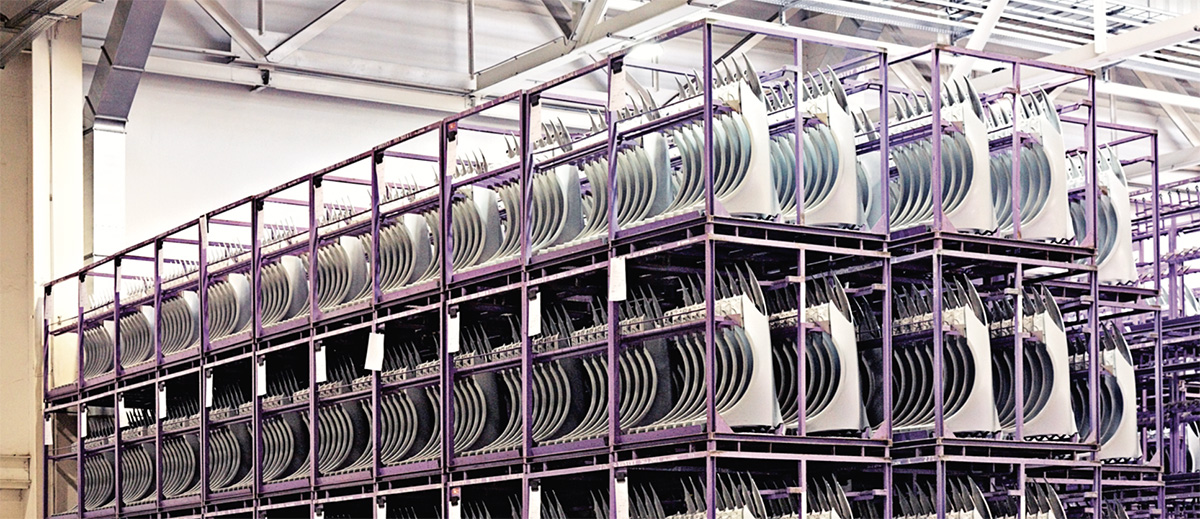
In a high-mix, low-volume environment the flows of information and product are much harder to see than in a shop that consistently does the same operations day after day. Because of this, there is usually a lot more waste present within the organization. Disjointed operations, uneven processes and oddball customer requirements are all really easy ways to lose a lot of time while trying to get parts out the door.
I’ll give you an example. One of our clients had a pretty bad throughput problem – parts were taking so long to get through production that the sales department was artificially increasing the order quantities before they were released to the shop floor. The thought process was that by the time the orders made it through production, the “extra” parts made would probably have gotten ordered by another customer in the interim, so they could be sold without having to wait for yet another order to go through the shop. Conversely, if said extra parts didn’t get ordered, they’d simply be put into finished goods. The former scenario would happen sometimes, but not as often as sales thought it did. And as a result, over time the warehouse gradually ran out of room as more and more “dead inventory” clogged up their finished goods racks.
In looking at their operations, it was pretty clear to see where there was waste and where there were bottlenecks. In one instance, a welder performed 20 minutes of rework on a single part (a 30% increase to his overall cycle time) as he struggled to meet the blueprint tolerance. In another, a machinist spent almost an hour setting up a mill just to put 4 holes into a part.
Get a clear view of what is happening – where it happens.
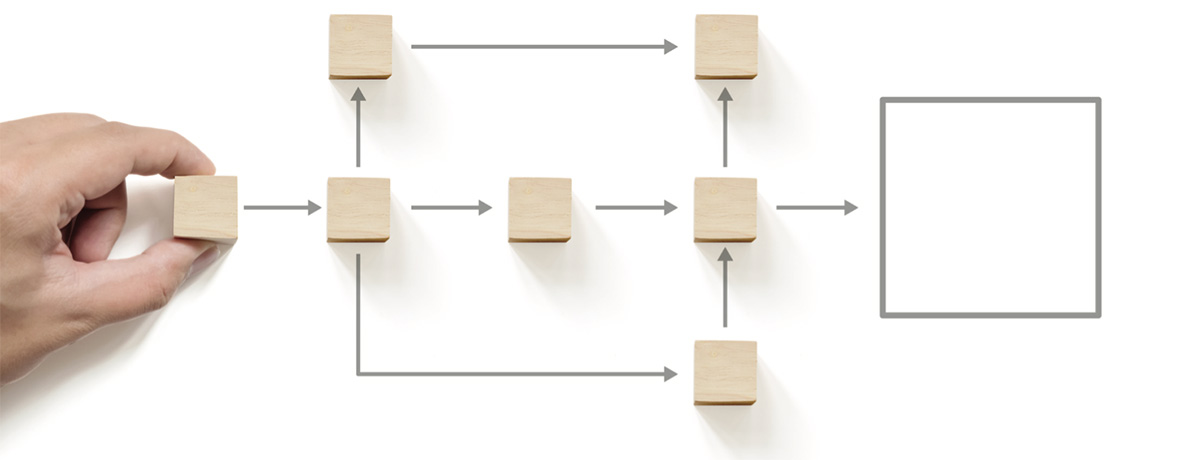
The first thing we did was map the process with the people who run them. There are lots of ways to do this, but ultimately, they all help us accomplish the same end goal; to graphically represent what is happening on the floor. In this particular case, we spent a lot of time walking the process. We asked a lot of questions of the people who were actually doing the work, then listened to their answers and ideas. This is called going to Gemba (“the actual place”) where work happens, and it’s the best way to experience for yourself how the work is getting done.
By doing this, we were able to see where things were getting jammed up – from unclear job assignments to bad upstream process quality. All of these were noted as opportunities for improvement on the map so that no idea was lost.
5S
Once we all had a clear understanding of what was happening, the team set about to make things better. The first step was instituting some good 5S practice. 5S is called this because, simply, it’s 5 words that start with the letter “S”: Sort, Set in order, Shine, Standardize and Sustain. 5S is a visual management system that helps get thingsneat, clean and orderly, which in turn saves a lot of time because no longer do people have to stop what they’re working on, go find whatever it is that they need, then get back to work. It puts what operators need where they need it and when they need it there. It sounds simple, but every day we lose untold production hours because someone has to stop working and go look for something or someone because they didn’t have what they needed.
Setup reduction
Another Lean tool we employed was that of Setup Reduction. For our Lean money, Setup Reduction has the best bang for the job shop buck because all of the time that gets taken out of a setup can go right toward production. It’s one of the easiest and quickest ways to make sure that your time is being spent wisely – making parts that you can sell to your customers. When machines are down (for a setup or otherwise), they aren’t making you any money. In this case, we focused on eliminating all the things that would prevent an operator from completing the setup – looking for tools, looking for a setup sheet, struggling with finicky fixtures… anything and everything that would stand in the way of getting the spindle turning again.
So, what happened?
Flash forward a couple months, and the team had increased overall throughput by more than 100%. And no, that’s not a typo; they had more than doubled their output. That tight print dimension that the welder was struggling with? Engineering revised the print to allow for a wider tolerance. This made the parts easier to weld and a lot faster to complete. That 1-hour setup time? The team got it down to about 7 minutes by putting needed tools and information at each machine (as opposed to having one central, shared toolbox), and making things easier to move, manipulate and fit. We also helped get the shop cleaned up – we got rid of old tools and fixtures that were either broken or out of service, as well as some equipment that had simply just been shoved into a corner. Overall, we freed up about 800 square feet of space. And finally, after some coaxing and Lean training, we got sales to stop artificially increasing order quantities, which helped free up associate’s time, production time and finished good space.

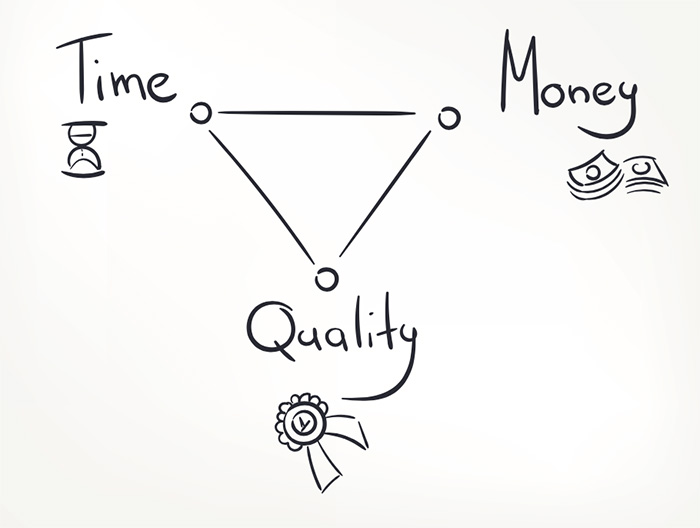
My point is this: Lean doesn’t have to be an all-or-nothing proposition. In truth, there are some aspects that just don’t fit into certain situations, and that’s okay. The whole point of Lean is to help you deliver better/faster/ more value to your customers and employing Lean tools and techniques into your job shop environment can help you do this effectively and more profitably!
About Paul Critchley
Paul Critchley is a recognized thought leader on employee engagement and continuous improvement and has helped businesses around the world achieve greater levels of success through the application of Lean techniques. A frequent speaker, he has keynoted at numerous corporate events, as well as at international conventions such as AME’s annual Lean conference and at OpEx Week. He’s also the host of “The New England Lean Podcast”, a weekly show that focuses on Lean leadership and New England-based businesses.
Paul is a former Board Member of the Northeast Region of AME, holds a B.S. in Mechanical Engineering, a M.S. degree in Management and a M.S. in Organizational Leadership.
He is passionate about Lean and creating organizational cultures that are sustainably engaged. He co-authored his first book – The Whole Professional, A Collection of Essays to Help You Achieve a Full and Satisfying Life to bring a fresh perspective on Work/Life Balance and how individuals and organizations can work together to achieve greater levels of attainment.
