



We thought it might be fun to, from time-to-time, revisit some old pieces of content that have lived in the pages of the Gateway Magazine at some point in the last 20+ years of the periodical’s existence. This will also serve as a welcome departure from all the pandemic prose we seem to have been typing up for the past year… With that departure in mind and in the spirit of taking “a look back,” let’s move forward (as best we can)! In many ways, the industry has changed greatly, while, in others, it’s “business as usual” where we’re simply looking to continue the grind and get ourselves from point A to point B in a job cycle.
Today we’re going back to December of 2012 to have a look at “A Gateway Educational Enlightenment Article” that we used to run as space permitted. The pieces were submitted by our readers, and, if you’d like to submit a new Gateway Educational Enlightenment piece, but all means, send away. The spotlight in December’s issue 9 years ago was an overview on CNC Machining. So, without further ado, here’s the text verbatim (with some minor formatting changes…)
What Does CNC Mean?
CNC is defined as Computer Numerical Control. A CNC equipped machine would be a machine that moves, operates, or is controlled by a computer with a program. The program tells the machine a lot of useful information, such as:
- What material to remove
- Where to remove said material
- How much of that material to remove
- Where to place a weld
- Where to set a gauge (back gauge) to bend or fold apart
- Etc.
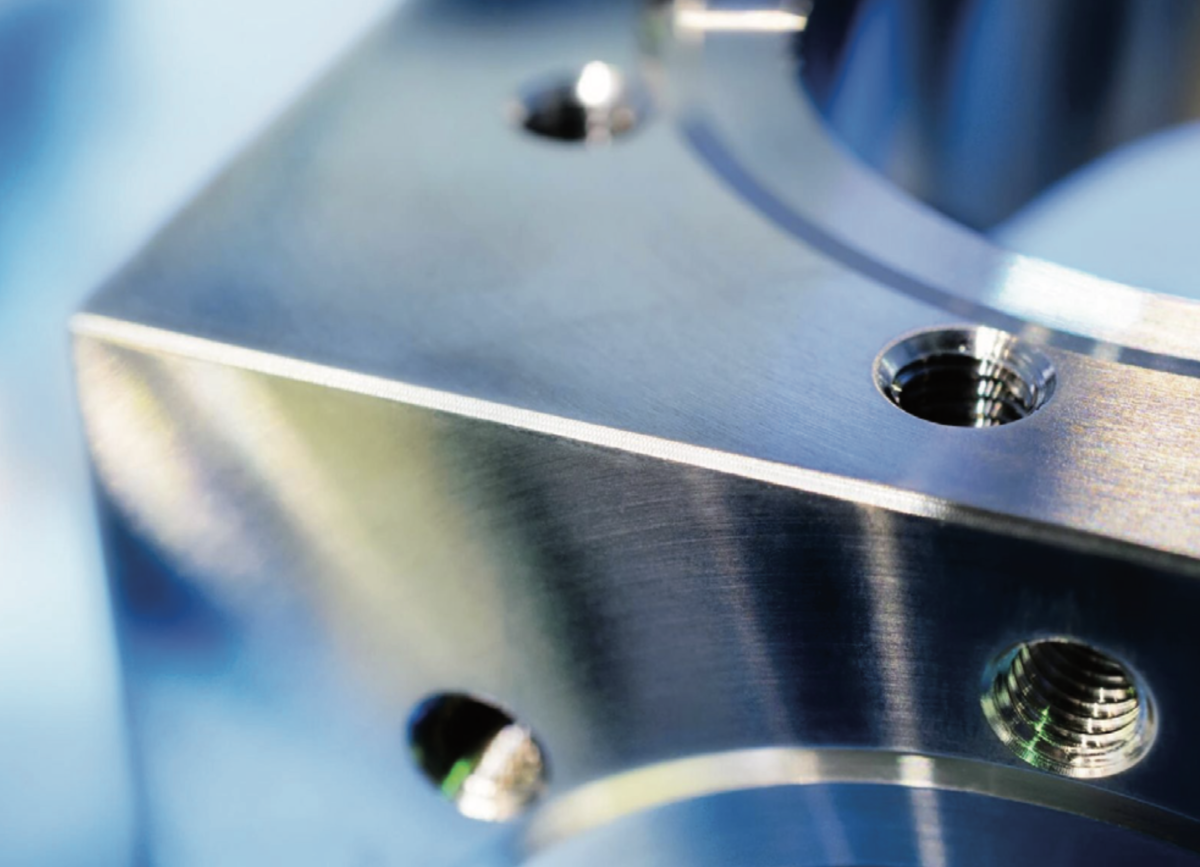
In short, it tells the machine to perform an operation to initiate a needed function of a job. There are also CNC systems which would be a system, or even a number of machines that can be computer controlled. CNC can also handle the change of tooling either automatically or for operator intervention.
Why Do We Need It Produced On CNC?
If you have a need for just a few pieces, you may not need to have it CNC machined. Parts are still produced on manual machines very successfully; but even for one or two very intricate designed parts, it may be faster to develop the program and use a CNC machine.
CNC machining is very accurate and precise compared to manual human operated machining. The CNC machine will never make an error because it only produces what the computer program tells it to do.
This allows very detailed, intricate machining to be performed repetitively. If the part needs to be made every few months, or years, or a million parts are needed, the finished parts will be exactly the same each time if all other factors are controlled.
I See Ads For All Types of CNC Processes. Are The All The Same?
The real difference is the varying types of movements that are controlled. A CNC guided welding machine can lay down very precisely positioned and sized welds for very good looking, sound welds, and, when coupled to a robotic arm, can be placed in very long continuous welds on very large assemblies.
A CNC lathe has material loaded to be turned into shapes of the parts. It can be a single piece mounted in a chuck, or through a hollow feed chuck for multiple parts. The material is clamped in the chuck that rotates the material while the cutting tools are fixed on a movable tool holder. The tool moves against the rotating material as the computer program directs, cutting the material to shape.
A CNC milling machine holds the tools, the rotating chuck, and the material to be worked, and is mounted (clamped in a vise or work holding fixture) in a fixed position. The spinning tools are moved against the fixed material cutting it to shape. In some. Cases a movable pallet may be used to move parts into position for metal removal. This allows the operator to pre-load the pallet while the machine machines a pallet already in place, resulting in essentially non-sop production.
In both cases, the speed of the machine is controlled by the computer program.
How Does CNC Machining Work?
Mills typically consist of a table that moves in the X and Y axis, and a tool spindle that moves in the Z (depth). The position of the tool is driven by motors through a series of step-down gears in order to provide highly accurate movements, or in modern designs, direct- drive stepper motor or servo motors. Open-loop control works as long as the forces are kept small enough and speeds are not too great. On commercial metal- working machines, close loop controls are standard and required in order to provide the accuracy, speed, and repeatability demanded.
As the controller hardware evolved, the mills themselves also evolved. One change has been to enclose the entire mechanism in a large box as a safety measure, often with additional safety interlocks to ensure the operator is far enough from the working piece for safe operation. Most new CNC systems built today are completely electronically controlled.
CNC-like systems are now used for any process that can be described as a series of movements and operations. These include:
- Laser cutting
- Welding
- Friction stir welding
- Ultrasonic welding
- Water jet machining
- Bending
- Spinning
- Pinning
- Flame and plasma cutting
- Gluing
- Fabric cutting
- Sewing
- Tape and fiber placement
- Routing
- Picking and placing
- and sawing…
Virtually any material operation or step.
The machines can be as simple as a drilling machine that drills a hole repeatedly, or they can be huge complex devices that can machine large cylinder blocks in multiple designs.
CNC machines can be operated either unmanned, or with a few operators manning a production “cell” of many machines. Once the program that is used to give the machining detail and the tools to be used, etc., is given, then the machinery can run by itself. They will change the tools in the ordered sequence; turn the component around so that a fresh face is exposed, and so on. Because these machines can run by themselves for hours at a time, they save man-power and other resources. Usually rouging operations are done on other machines to save on productivity.
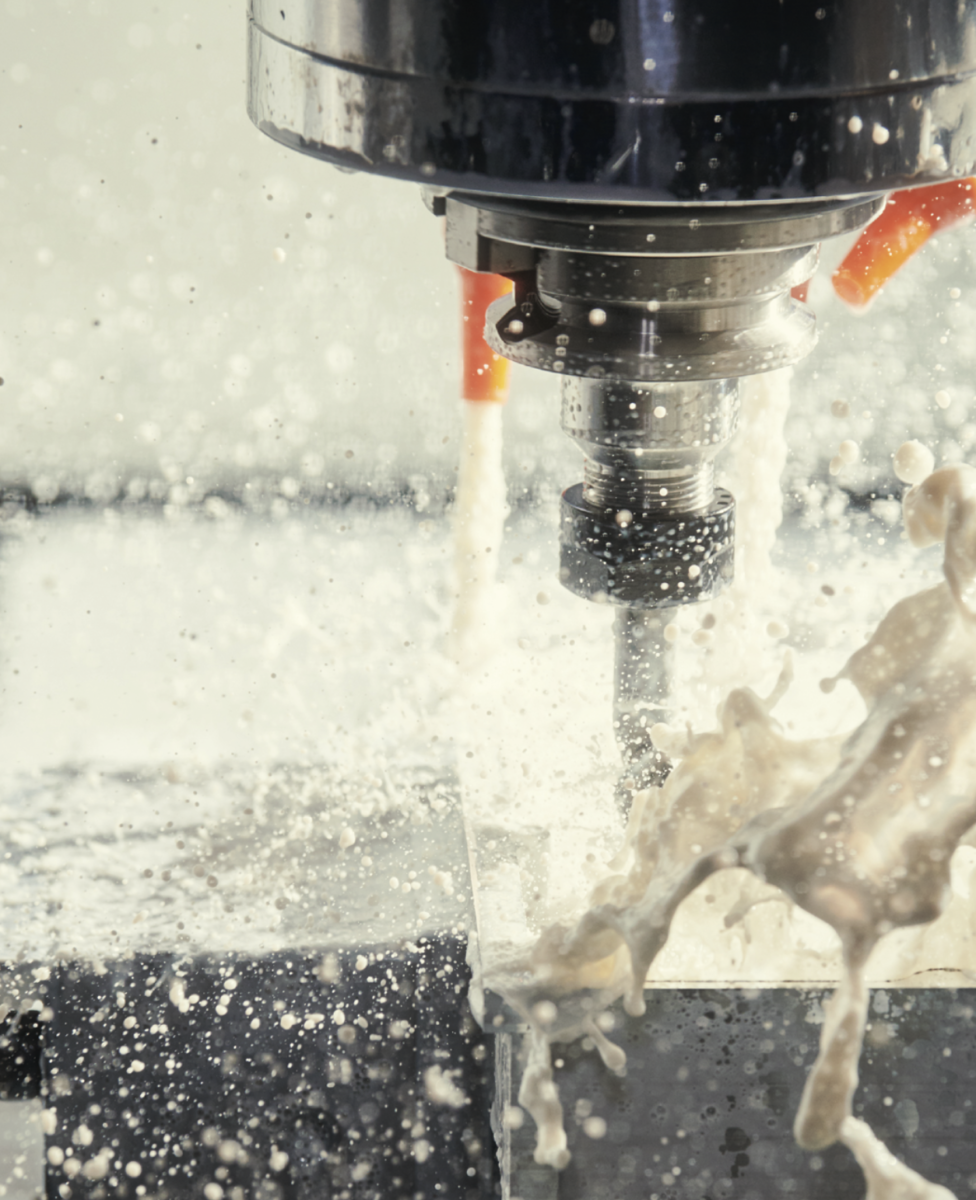
The CNC machine can be equipped with sensors to evaluate the sharpness of the tooling cutters based on the drag of the cutter to either change feed and speeds, or to actually change to a new cutter. In some automated machine shops the lights are turned off, and the machines operate completely by program in the dark. Robots driven by computer move parts from station to station keeping the entire plant in operation. It will provide lubrication and even sense if a lubricator is out of oil or gets plugged up.
CNC machine operation is relatively easy to learn and to set up as you just have to enter the instructions into a computer program. You can also recall the machine’s previous settings instantly. This process allows you to save time as lengthy manual changeovers are not required.
CNC machines used in punching sheet metal parts are available to load a fresh raw sheet of material, punch out all the components, chop up the waste skeleton, and reload another fresh sheet of material. The labor savings lowers the costs to produce parts and speeds up the lead time to get the parts made. There are a wide variety of CNC machines available such as turning, drilling, grinding, and machining centers that perform milling, drilling, boring, tapping, and contour operations. CNC lathes like Swiss Automatics can be equipped with milling heads that allow a part to be turned to shape, then milled with flats, drilled, and tapped, producing 100% finished parts non-stop.
Where can CNC machines be found?
Although CNC machining is used by many types of industries it can also be used in other areas such as:
- Sawmills
- Planers
- Wood working
- Plastic forming
- Routing
- Metal fabricating
- And more…
A typical CNC system may consist of a CNC mill or a lathe on a 4th axis rotary table. There are 3 axis, 5 axis, and 7 axis machines on the market with additional special attachments that can be used to perform special operations.
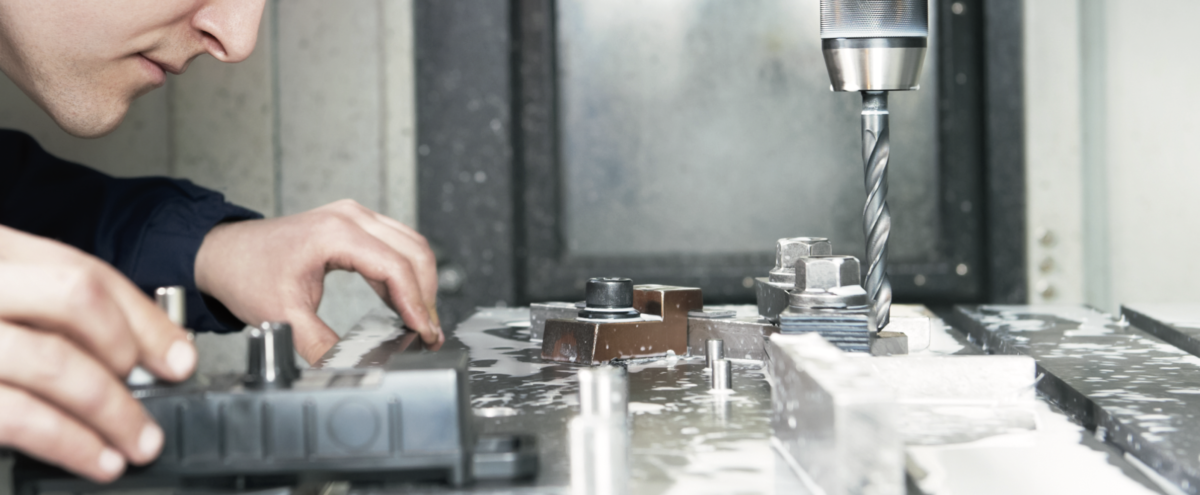
Isn’t programming the machines costly?
Programmers can be thousands of miles away and the programs can be sent by broadband to operate the equipment. But the major change is many engineering programs now incorporate CAD (Computer Assisted Design) software. That allows the part or assembly design to go directly from design to manufacturing without the need of producing a drafted paper drawing of the manufactured component. That produces user-friendly information that can be interpreted by the CNC computer to use the raw data directly from the engineering specifications. The programmer role is simplified and they only need to choose the tool, the speeds and feeds, and the tooling changes to make ready the CNC production of the next order.
The introduction of CNC machines radically changed the manufacturing industry. Machining curves is made as easy as cutting a straight line. Complex 3D structures are no longer hard to create, easy to produce, and the number of machining steps that required human action have been dramatically reduced.
Manufacturing processes with CNC machining improves consistency and quality. CNC automation primarily eliminates all human error and allows CNC operators to perform additional tasks, like deburring, QC inspection, loading pallets, etc. The manufacturing process and the downtime required to change the machine setup to produce different components markedly reduced.
This is the CNC environment.
Fun to revisit, and hey, if you’ve got an “Enlightenment Article” you’d like to submit, please, don’t hesitate, we, and all our readers, love learning about the goings on in the vast world of manufacturing!
Email submissions to: chris@thegatewaymag.com
